THE PHANTOM RENT BUMP
How sellers manufacture income that doesn’t exist — and how to protect yourself before you make an offer

I pulled a rent roll this week on a four-tenant strip center in Los Angeles.
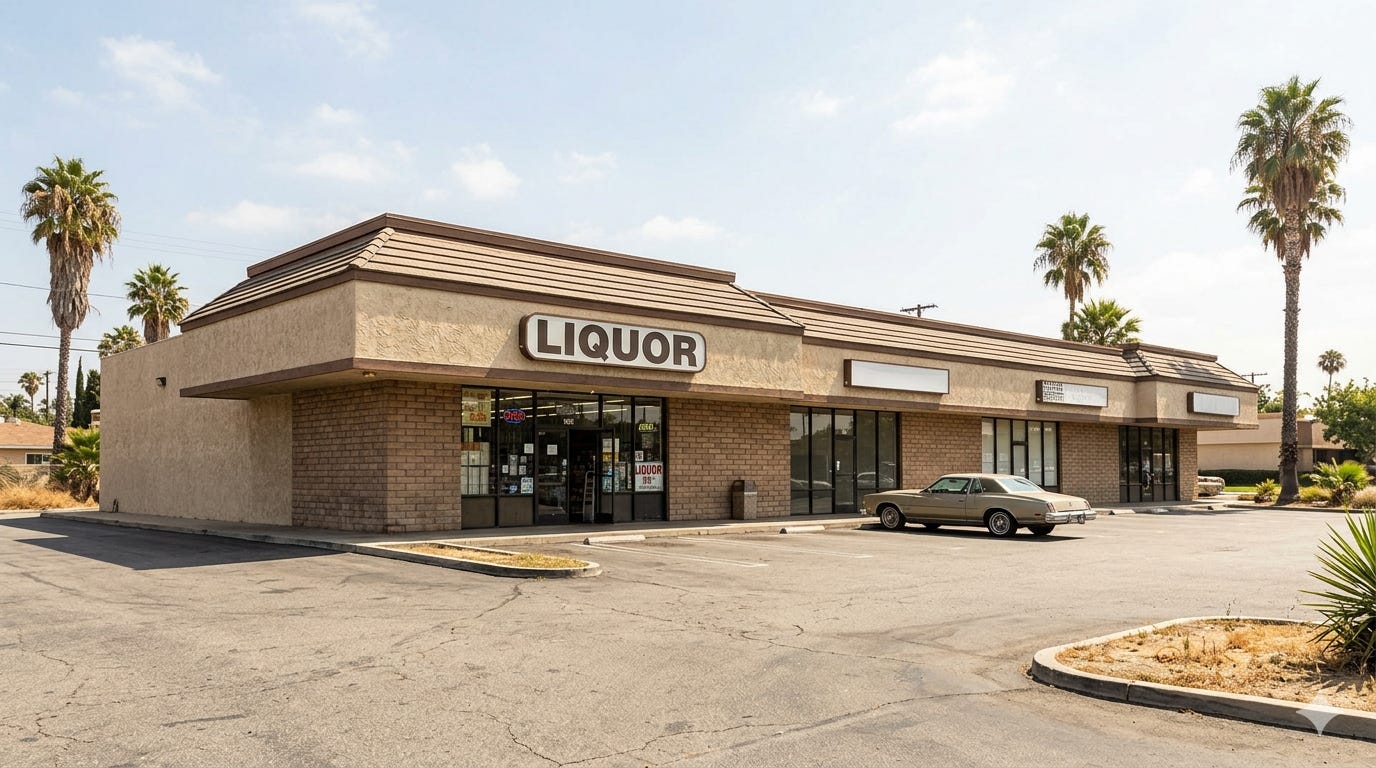
Image: AI-generated illustration
The seller is asking $4,999,999 and marketing it at a 5% cap. On paper it looks clean. Four tenants, over 5,000 square feet, nearly $22,000 a month in income, over $224,000 a year in net operating income.
I looked at the actual rent roll.
Monthly income: $18,917. Annual NOI: $188,108. At $4,999,999 that’s a 4.18% cap — not 5%.
The seller is marketing income that hasn’t happened yet.
Let me be clear — this isn’t unusual. Almost every commercial listing I see is marketed on proforma income rather than actual income. Sellers and their brokers present the best case scenario as if it’s already happening. A rent bump that hasn’t been signed. A vacancy that’s about to be leased. A tenant who’s in negotiations. It’s not fraud — it’s marketing. But if you’re the buyer writing the check, you need to know the difference between what’s projected and what’s in the bank.
WHERE THE GAP LIVES
The entire difference between the proforma and the actual rent roll lives in one tenant. One unit. The anchor. The largest space in the center.
The liquor store.
The seller’s proforma shows $7,950 a month in base rent. The actual rent roll shows $4,892 a month. That’s $3,058 a month — $36,690 a year — of income that exists only on a spreadsheet.
The seller is projecting a rent bump that was supposed to start over a year ago. I asked the listing agent for the signed lease amendment showing that bump.
Nothing produced.
Until that amendment is signed and executed, that income doesn’t exist. You can’t underwrite it, you can’t finance against it, and you certainly can’t pay $4,999,999 for it.
THE LISTING AGENT PROBLEM
The listing has been sitting for over a year. No price reductions. Still no sale.
I asked the listing agent why.
She couldn’t explain it.
What she did tell me — the seller will consider anything above $4,000,000.
That’s not a price. That’s a confession.
The seller listed at $4,999,999 and a year later is telling buyers to name their number above $4,000,000. The market already told them what it thinks.
The seller built a proforma around income that hasn’t materialized. Every serious buyer who looked at it pulled the actual rent roll and walked. The listing agent either doesn’t understand the gap or isn’t explaining it to her seller.
Either way the property sits.
HERE’S WHAT MAKES THIS INTERESTING
The seller used to own the liquor license himself. Sold it to the tenant. He knows exactly what that store produces. The projected rent bump isn’t random — it’s a seller who understands the business intimately and is trying to pull forward value on the way out based on inside knowledge of his former operation.
Smart move on his part. But until it’s signed it doesn’t exist.
THE APPRAISAL PROBLEM
Here’s what makes this even cleaner for a buyer.
This deal won’t appraise at $4,999,999 under any conventional financing scenario. Lenders underwrite to actual income — not proforma. At $188,108 actual NOI a lender at current rates with standard debt coverage requirements will land somewhere around $3.2 to $3.5 million on appraised value.
The seller can hold at $4,999,999 all day. The appraisal will tell the real story.
Any financed buyer is protected by that reality.
THE OFFER
Based on the actual rent roll the property supports an offer of $3,600,000.
That’s a 5.22% cap on verified income. Not a lowball — honest underwriting.
Key contingencies would include an executed lease amendment on the anchor tenant, estoppels from all four tenants, and three years of financials.
If the seller produces a clean signed amendment showing the rent bump is real, pricing gets revisited. Until that document exists, $3.6 million is where the numbers take us.
The seller won’t accept anything below $4,000,000. The listing agent confirmed it.
At $4,000,000 on actual income that’s a 4.70% cap. On proforma if the rent bump executes — 5.62%.
That’s the decision a buyer has to make. Pay for what’s verified today or pay for what the seller hopes to collect tomorrow.
This is where most buyers stop. They see the deal, they understand the gap, and then they wing it.
Paid subscribers get the exact framework I use on every deal before I advise a buyer to make an offer — what to ask for, what to verify, and what kills a deal before it starts.
$8 a month. Cancel anytime.
